

Why Two Solar Forecasts for the Same Home Can Produce Different Cost and Savings Figures
Discover why solar quotes can show different generation, costs and savings for the same Cambridge home, and learn what to compare before choosing.

Why you can trust our content
We know that the solar industry is full of misinformation, but we only use reliable sources, including:





At a glance
Why Two Solar Forecasts for the Same Home Can Produce Different Cost and Savings Figures
If you request solar quotations from two installers, you might receive noticeably different predictions for annual electricity generation, potential savings and installation costs. Even when both companies assess the same Cambridge property, their figures may not match.
This does not automatically mean that one quotation is wrong. Differences can arise from the proposed equipment, roof assumptions, electricity usage estimates and the methods used to calculate financial returns. However, large differences deserve a closer look before you make a decision.
Understanding how these estimates are produced helps you compare proposals fairly. Instead of choosing the quotation with the biggest savings figure or lowest headline price, you can examine what each installer is actually offering and whether the assumptions are realistic for your home.
Why Can Two Solar Forecasts Show Different Annual Generation?
Solar forecasts estimate how much electricity a proposed system could produce over a given period, usually one year. Although installers may use similar weather data, the final results can differ because they may not be modelling exactly the same system or roof conditions.
The most common reasons include:
- Different solar panel capacities.
- Different roof orientations or pitch assumptions.
- Different assessments of shading from trees, chimneys or nearby buildings.
- Different allowances for inverter and other system losses.
- Different calculation tools or modelling methods.
- Different assumptions about equipment performance.
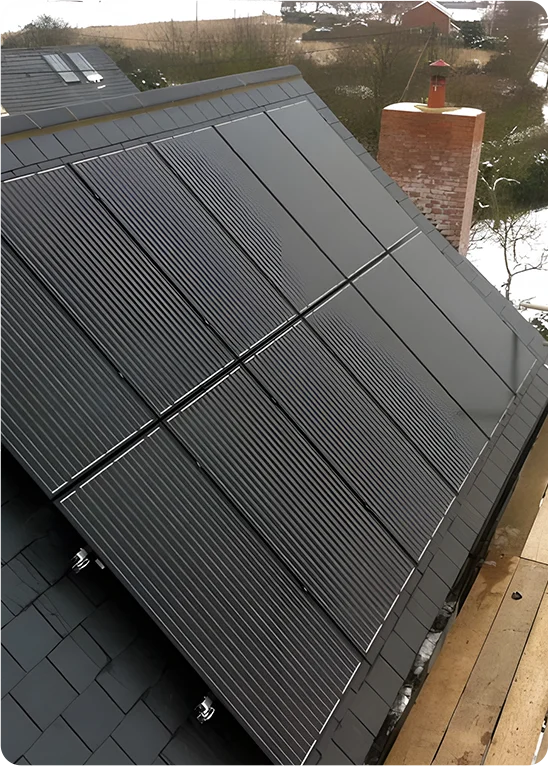
For example, one proposal might use a detailed roof assessment that accounts for a chimney casting shade during part of the day. Another might use a simplified roof model that does not fully account for this obstruction.
The second forecast could therefore predict greater generation, even if the proposed system is not necessarily better.
When comparing solar cost Cambridge proposals, check that the generation figures relate to comparable system sizes and realistic roof conditions. A higher forecast is only useful if the assumptions behind it are sound.
Could Different Equipment Explain the Difference in Savings?
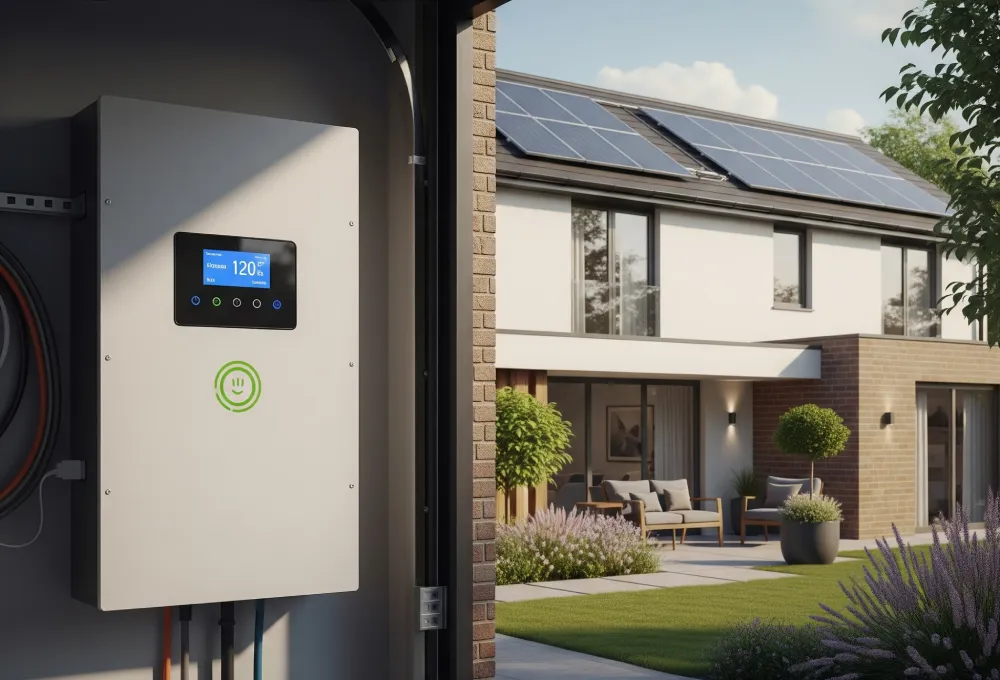
Yes. Two quotations may propose different combinations of panels, inverters and battery storage, each with its own technical specifications and cost.
A system with greater panel capacity may generate more electricity annually, provided the roof and other conditions are suitable. However, a larger system will usually have a different installation price, and the additional generation may not translate into an equivalent increase in financial savings.
The equipment specification should identify:
- The number, make and rated capacity of the solar panels.
- The inverter type and capacity.
- Whether battery storage is included.
- The battery’s nominal and usable capacity, where applicable.
- Monitoring equipment and other included components.
- Any relevant warranties and installation provisions.
The inverter matters because it converts the electricity produced by the panels into a form suitable for household use or export. Its capacity and configuration can affect system operation, so it should be assessed alongside the panels rather than in isolation.
A battery also changes how surplus electricity may be used. However, its value depends on charging opportunities, household demand, efficiency and the difference between import and export rates.
A fair comparison should therefore start with the complete equipment specification, not simply the total number of panels or the size of the battery.
How Do Electricity Usage Assumptions Change the Savings Estimate?
Annual generation and financial savings are not the same thing. A solar system might produce a substantial amount of electricity, but the financial benefit depends partly on how much of that electricity the household uses directly.
Solar electricity consumed at the time it is generated can reduce the need to purchase electricity from the grid. Surplus electricity may be exported, potentially earning payments under an eligible export tariff.
These two routes can have different financial values.
Consider two households with identical solar systems. One household uses appliances during the day, while the other is usually empty until the evening. The first may consume a larger share of its generation directly. The second may export more surplus electricity unless a battery or changes in usage patterns help shift consumption.
Their generation forecasts could be similar, but their projected savings could differ.
When reviewing a proposal, ask the installer to clarify:
- What annual electricity consumption has been assumed.
- How much solar generation is expected to be used directly.
- Whether battery storage is included in the model.
- What export tariff and payment rate have been used.
- Which electricity import prices underpin the savings estimate.
These assumptions should be relevant to your household rather than based on an unexplained standard profile.
Why Might Solar Payback Estimates Be Different?
A payback estimate describes how long a system might take to recover its initial cost through projected financial benefits. It is not a guaranteed date when the installation will become profitable.
The result depends on the initial installation price and the annual benefit assumed by the calculation. If two installers use different figures for either variable, their payback estimates will differ.
For instance, a quotation with a higher initial price may still project a shorter payback period if it assumes substantially greater annual savings. Another quotation may estimate lower savings but use more cautious assumptions about electricity prices and household consumption.
A useful payback calculation should explain whether it includes:
- The full quoted installation cost.
- Estimated savings from electricity used directly.
- Expected export income.
- The effect of battery storage, where applicable.
- Assumptions about future electricity prices.
- Any maintenance or replacement costs included in the model.
It is also important to understand what the calculation leaves out. Future tariffs, household usage and equipment performance can change, so an estimate based on constant conditions may not reflect the system’s eventual financial results.
For this reason, compare the assumptions behind the payback period rather than treating the shortest estimate as proof of the best investment.
What Does the Average Cost of Solar in Cambridge Actually Tell You?
The average cost of solar can provide a useful starting point when researching an installation, but it cannot establish the right price for every property.
The total cost depends on the system size, equipment, roof access, installation complexity and any additional electrical work. Battery storage can increase the initial outlay, while the precise amount depends on the battery specification and installation requirements.
A general market average may also combine quotations with different equipment, warranties and included services. This makes it difficult to compare that average directly with a detailed proposal for your home.
When investigating the average cost of solar Cambridge homeowners might encounter, consider the following distinctions.
| Cost factor | What can influence the price? | What to check in a quotation |
|---|---|---|
| Solar panel capacity | Number and specification of panels | Total kWp and panel details |
| Inverter | Type, capacity and system compatibility | Model and included equipment |
| Battery storage | Usable capacity and power rating | Whether storage is included and its specification |
| Roof complexity | Access, layout and installation conditions | Any additional labour or access costs |
| Electrical work | Existing equipment and required upgrades | Included work and possible exclusions |
| Monitoring and warranties | Equipment and service arrangements | What is covered and for how long |
Use averages as a guide, not as a substitute for a property-specific quotation. A higher price may reflect a different specification or additional work, while a lower price may omit items that another installer has included.
The important question is whether the proposed price is justified by the equipment, work and expected performance.
How Can You Compare Solar Quotes on a Like-for-Like Basis?
The easiest way to make a fair comparison is to put the main technical and financial details side by side. This allows you to identify differences that might otherwise be hidden behind a headline price.
Use this checklist when reviewing proposals:
- Compare system capacity. Confirm the total kWp and panel specification.
- Check the generation forecast. Ask how roof orientation, shading and system losses have been modelled.
- Review the equipment. Compare the inverter, battery and other included components.
- Examine the savings calculation. Check electricity prices, self-consumption and export assumptions.
- Confirm the installation price. Identify included work, exclusions and potential additional costs.
- Review warranty terms. Distinguish between product warranties and installation workmanship cover.
- Clarify outstanding checks. Establish whether a survey could change the design or quotation.
If an installer cannot explain why its figures differ from another proposal, ask for a clearer breakdown before making a decision.
A transparent quotation should help you understand both the expected benefits and the limitations of the design.
Which Questions Should You Ask Before Accepting a Solar Quote?
A few direct questions can reveal whether an estimate is based on a realistic assessment or a simplified set of assumptions.
Ask the installer:
- Is the generation forecast specific to my roof?
- Has shading been included in the calculation?
- How much electricity is expected to be used directly?
- What export rate has been used to estimate income?
- Are the projected savings based on my actual consumption?
- Does the quoted price include all the work currently identified?
- Which aspects of the design still require confirmation?
You should also ask how the installer expects the system to perform across different seasons. Annual totals can hide the fact that generation is uneven throughout the year, which can affect both battery charging and household electricity imports.
Clear answers make it easier to understand what you are buying and whether the proposal reflects your priorities.
Related articles


What type of property do you have?

Detached House

Semi Detached House

Terraced House

Flat or Apartment
Bungalow
At a glance
Why Two Solar Forecasts for the Same Home Can Produce Different Cost and Savings Figures
If you request solar quotations from two installers, you might receive noticeably different predictions for annual electricity generation, potential savings and installation costs. Even when both companies assess the same Cambridge property, their figures may not match.
This does not automatically mean that one quotation is wrong. Differences can arise from the proposed equipment, roof assumptions, electricity usage estimates and the methods used to calculate financial returns. However, large differences deserve a closer look before you make a decision.
Understanding how these estimates are produced helps you compare proposals fairly. Instead of choosing the quotation with the biggest savings figure or lowest headline price, you can examine what each installer is actually offering and whether the assumptions are realistic for your home.
Why Can Two Solar Forecasts Show Different Annual Generation?
Solar forecasts estimate how much electricity a proposed system could produce over a given period, usually one year. Although installers may use similar weather data, the final results can differ because they may not be modelling exactly the same system or roof conditions.
The most common reasons include:
- Different solar panel capacities.
- Different roof orientations or pitch assumptions.
- Different assessments of shading from trees, chimneys or nearby buildings.
- Different allowances for inverter and other system losses.
- Different calculation tools or modelling methods.
- Different assumptions about equipment performance.
For example, one proposal might use a detailed roof assessment that accounts for a chimney casting shade during part of the day. Another might use a simplified roof model that does not fully account for this obstruction.
The second forecast could therefore predict greater generation, even if the proposed system is not necessarily better.
When comparing solar cost Cambridge proposals, check that the generation figures relate to comparable system sizes and realistic roof conditions. A higher forecast is only useful if the assumptions behind it are sound.
Could Different Equipment Explain the Difference in Savings?
Yes. Two quotations may propose different combinations of panels, inverters and battery storage, each with its own technical specifications and cost.
A system with greater panel capacity may generate more electricity annually, provided the roof and other conditions are suitable. However, a larger system will usually have a different installation price, and the additional generation may not translate into an equivalent increase in financial savings.
The equipment specification should identify:
- The number, make and rated capacity of the solar panels.
- The inverter type and capacity.
- Whether battery storage is included.
- The battery’s nominal and usable capacity, where applicable.
- Monitoring equipment and other included components.
- Any relevant warranties and installation provisions.
The inverter matters because it converts the electricity produced by the panels into a form suitable for household use or export. Its capacity and configuration can affect system operation, so it should be assessed alongside the panels rather than in isolation.
A battery also changes how surplus electricity may be used. However, its value depends on charging opportunities, household demand, efficiency and the difference between import and export rates.
A fair comparison should therefore start with the complete equipment specification, not simply the total number of panels or the size of the battery.
How Do Electricity Usage Assumptions Change the Savings Estimate?
Annual generation and financial savings are not the same thing. A solar system might produce a substantial amount of electricity, but the financial benefit depends partly on how much of that electricity the household uses directly.
Solar electricity consumed at the time it is generated can reduce the need to purchase electricity from the grid. Surplus electricity may be exported, potentially earning payments under an eligible export tariff.
These two routes can have different financial values.
Consider two households with identical solar systems. One household uses appliances during the day, while the other is usually empty until the evening. The first may consume a larger share of its generation directly. The second may export more surplus electricity unless a battery or changes in usage patterns help shift consumption.
Their generation forecasts could be similar, but their projected savings could differ.
When reviewing a proposal, ask the installer to clarify:
- What annual electricity consumption has been assumed.
- How much solar generation is expected to be used directly.
- Whether battery storage is included in the model.
- What export tariff and payment rate have been used.
- Which electricity import prices underpin the savings estimate.
These assumptions should be relevant to your household rather than based on an unexplained standard profile.
Why Might Solar Payback Estimates Be Different?
A payback estimate describes how long a system might take to recover its initial cost through projected financial benefits. It is not a guaranteed date when the installation will become profitable.
The result depends on the initial installation price and the annual benefit assumed by the calculation. If two installers use different figures for either variable, their payback estimates will differ.
For instance, a quotation with a higher initial price may still project a shorter payback period if it assumes substantially greater annual savings. Another quotation may estimate lower savings but use more cautious assumptions about electricity prices and household consumption.
A useful payback calculation should explain whether it includes:
- The full quoted installation cost.
- Estimated savings from electricity used directly.
- Expected export income.
- The effect of battery storage, where applicable.
- Assumptions about future electricity prices.
- Any maintenance or replacement costs included in the model.
It is also important to understand what the calculation leaves out. Future tariffs, household usage and equipment performance can change, so an estimate based on constant conditions may not reflect the system’s eventual financial results.
For this reason, compare the assumptions behind the payback period rather than treating the shortest estimate as proof of the best investment.
What Does the Average Cost of Solar in Cambridge Actually Tell You?
The average cost of solar can provide a useful starting point when researching an installation, but it cannot establish the right price for every property.
The total cost depends on the system size, equipment, roof access, installation complexity and any additional electrical work. Battery storage can increase the initial outlay, while the precise amount depends on the battery specification and installation requirements.
A general market average may also combine quotations with different equipment, warranties and included services. This makes it difficult to compare that average directly with a detailed proposal for your home.
When investigating the average cost of solar Cambridge homeowners might encounter, consider the following distinctions.
| Cost factor | What can influence the price? | What to check in a quotation |
|---|---|---|
| Solar panel capacity | Number and specification of panels | Total kWp and panel details |
| Inverter | Type, capacity and system compatibility | Model and included equipment |
| Battery storage | Usable capacity and power rating | Whether storage is included and its specification |
| Roof complexity | Access, layout and installation conditions | Any additional labour or access costs |
| Electrical work | Existing equipment and required upgrades | Included work and possible exclusions |
| Monitoring and warranties | Equipment and service arrangements | What is covered and for how long |
Use averages as a guide, not as a substitute for a property-specific quotation. A higher price may reflect a different specification or additional work, while a lower price may omit items that another installer has included.
The important question is whether the proposed price is justified by the equipment, work and expected performance.
How Can You Compare Solar Quotes on a Like-for-Like Basis?
The easiest way to make a fair comparison is to put the main technical and financial details side by side. This allows you to identify differences that might otherwise be hidden behind a headline price.
Use this checklist when reviewing proposals:
- Compare system capacity. Confirm the total kWp and panel specification.
- Check the generation forecast. Ask how roof orientation, shading and system losses have been modelled.
- Review the equipment. Compare the inverter, battery and other included components.
- Examine the savings calculation. Check electricity prices, self-consumption and export assumptions.
- Confirm the installation price. Identify included work, exclusions and potential additional costs.
- Review warranty terms. Distinguish between product warranties and installation workmanship cover.
- Clarify outstanding checks. Establish whether a survey could change the design or quotation.
If an installer cannot explain why its figures differ from another proposal, ask for a clearer breakdown before making a decision.
A transparent quotation should help you understand both the expected benefits and the limitations of the design.
Which Questions Should You Ask Before Accepting a Solar Quote?
A few direct questions can reveal whether an estimate is based on a realistic assessment or a simplified set of assumptions.
Ask the installer:
- Is the generation forecast specific to my roof?
- Has shading been included in the calculation?
- How much electricity is expected to be used directly?
- What export rate has been used to estimate income?
- Are the projected savings based on my actual consumption?
- Does the quoted price include all the work currently identified?
- Which aspects of the design still require confirmation?
You should also ask how the installer expects the system to perform across different seasons. Annual totals can hide the fact that generation is uneven throughout the year, which can affect both battery charging and household electricity imports.
Clear answers make it easier to understand what you are buying and whether the proposal reflects your priorities.
Related articles

What type of property do you have?
Detached House
Semi Detached House
Terraced House
Flat or Apartment
Bungalow
