

Choosing a Solar and Battery Company: Ask About Panel, Inverter and Battery Compatibility
Choosing a solar and battery system is not simply a matter of finding panels with a good specification and adding a battery. The components need to work together as a complete system, and the way they are selected can affect generation, battery charging, monitoring and future upgrades.

Why you can trust our content
We know that the solar industry is full of misinformation, but we only use reliable sources, including:




At a glance
For homeowners comparing installers in Cambridge, it is therefore useful to look beyond the headline panel wattage or battery capacity. A well-designed system should have components selected around the property, energy use and intended operation.
This guide explains what to ask a solar and battery company Cambridge homeowners are considering, with particular attention to compatibility between panels, inverters and batteries.
Why does component compatibility matter?
Solar panels produce electricity as direct current (DC), while most household appliances use alternating current (AC). The inverter sits between the generation system and the home’s electrical circuits, converting and managing the electricity so it can be used appropriately.
A battery introduces another layer of system design. Depending on the configuration, electricity may pass through the inverter before reaching the battery, or the battery may have its own compatible power electronics.
This means component selection is not an isolated decision. A panel, inverter and battery can each have impressive specifications, but that does not automatically mean they form the right combination.
Compatibility can influence:
- How electricity moves between the panels, home and battery
- How efficiently surplus solar generation can be stored
- Maximum charging and discharging power
- Monitoring and system control
- Whether additional battery capacity can be added later
- Which warranties and manufacturer requirements apply
When comparing a solar and battery company Cambridge homeowners can use, ask the installer to explain the system as a complete design rather than discussing each product separately.
What should an installer explain about the panels?
Solar panels are usually one of the most visible parts of the installation, but wattage is only one specification worth considering.
An installer should be able to explain why the proposed panel is suitable for the roof and how its electrical characteristics work with the chosen inverter.
Important points can include:
| Panel consideration | Why it matters |
| Rated power | Indicates the panel’s nominal generation capacity |
| Physical dimensions | Determines how many panels may fit on available roof space |
| Voltage and current | Must be considered when designing compatible strings |
| Roof layout | Affects how panels can be arranged and connected |
| Shading | May influence the choice of inverter or optimisation equipment |
| Warranty | Provides information about long-term product coverage |
Roof orientation, pitch, shading and available space can all influence the final design. Two properties with the same annual electricity consumption may therefore require different panel layouts.
How should the inverter match the solar array?
The inverter is a central part of the system because it manages the conversion of electricity generated by the panels.
An installer should explain the inverter’s capacity and how it relates to the proposed solar array. The relationship is not necessarily as simple as matching the panel capacity and inverter rating exactly. System designers consider factors such as expected generation, roof orientation, panel characteristics and the inverter’s operating range.
It is also worth asking about:
- Maximum DC input
- Number of MPPT inputs
- Maximum input voltage and current
- AC output rating
- Monitoring capabilities
- Battery compatibility
- Manufacturer support and warranty
This information can help explain why one inverter has been selected over another.
A larger inverter is not automatically a better choice. The appropriate specification depends on the system it is intended to control.
If a quotation lists an inverter without explaining how it fits the proposed array, ask the installation team to walk you through the reasoning before making a decision.
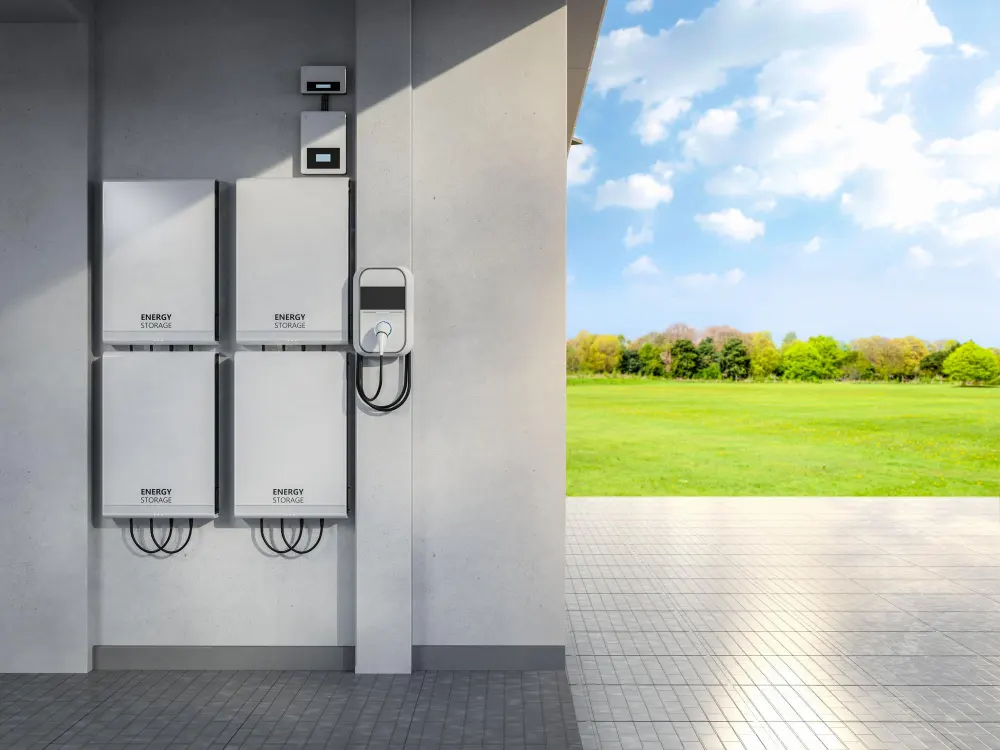
Does the battery need to match the inverter?
Yes, battery compatibility is an important part of system design.
Not every battery can simply be connected to every inverter. The inverter and battery need to communicate correctly and operate within their respective electrical and manufacturer specifications.
There are several areas to check:
- Compatible equipment – Is the battery officially supported by the proposed inverter?
- Voltage range – Does the battery operate within the inverter’s required range?
- Power limits – Can the system charge and discharge at the required rate?
- Communication – Can the battery and inverter exchange the information needed for control?
- Expansion – Can additional battery modules be added if household requirements change?
- Warranty conditions – Are there installation or configuration requirements that need to be followed?
Battery capacity is also different from battery power. Capacity describes how much energy can be stored, usually measured in kWh, while power describes how quickly electricity can be delivered or accepted, measured in kW.
A system therefore needs more than a large kWh figure to meet a particular household’s requirements.
What about future expansion?
Future compatibility deserves attention before installation, even if you do not intend to expand the system immediately.
For example, a homeowner may initially install solar panels and later decide to increase battery storage because their electricity use changes. Whether this is straightforward depends on the equipment already installed and the manufacturer’s supported configurations.
Ask the installer:
- Can another battery module be added later?
- Is the inverter designed to support additional storage?
- Are there limits on the number or age of battery modules?
- Would extra solar panels be possible?
- Could the monitoring system accommodate future changes?
- Would an upgrade require replacing existing equipment?
A system designed with future requirements in mind can make later decisions easier, although expansion should never be assumed without checking the manufacturer’s technical requirements.

What type of property do you have?

Detached House

Semi Detached House

Terraced House

Flat or Apartment
Bungalow
It just takes 2 minutes
And then you can book a free consultation
How can you compare quotations fairly?
When several companies provide proposals, comparing only the total price can hide important differences in specification.
A useful quotation should identify the main components and provide enough information for you to understand what has been proposed.
Look for details such as:
- Panel manufacturer and model
- Number and rated output of panels
- Inverter manufacturer and model
- Battery manufacturer and model
- Battery usable capacity
- Relevant power ratings
- Mounting and electrical equipment
- Monitoring arrangements
- Product and workmanship warranties
- Installation and commissioning details
If one quotation contains precise equipment information while another simply says “solar system with battery”, it may not be possible to make a meaningful comparison without asking additional questions.
A local solar installation company should be able to discuss these details clearly rather than expecting you to make technical comparisons without guidance.
What questions should you ask before choosing an installer?
You do not need to become a solar engineer to assess whether a proposed system has been properly explained.
Consider asking:
Why have these panels been selected?
The answer should relate to the roof, system design and electrical characteristics rather than simply the panel’s headline wattage.
Why is this inverter suitable?
Ask how its capacity, inputs and battery compatibility relate to the proposed array.
Is the battery fully compatible with the inverter?
The installer should be able to confirm the supported configuration.
Can the system be expanded later?
Find out what can realistically be upgraded and whether there are limitations.
What happens if one component needs replacing?
Understanding the system architecture can make future maintenance easier.
Who is responsible for the complete design?
Ideally, there should be clear responsibility for ensuring the components operate together as intended.
Does the installation company’s location matter?
Local knowledge can be useful, particularly when an installer regularly works with properties in the area.
A local solar installation company may be familiar with common roof types, local housing characteristics and the practical considerations involved in surveying and installing systems nearby. However, location alone does not establish whether a system has been designed appropriately.
Check the company’s qualifications, installation process, proposed equipment, warranties and technical explanation alongside its location.
For homeowners comparing a solar and battery company in Cambridge, the important question is not simply who can supply the equipment. It is who can explain why the selected components belong together and how the system is intended to operate.
Choosing a Solar and Battery System With Confidence
Solar and battery technology works best when the components are considered as an integrated system rather than a collection of individual products.
Before choosing an installer, ask how the panels, inverter and battery have been matched, whether the system can accommodate future changes and what specifications and warranties are included in the quotation.
Cambridge Solar can help homeowners understand the technical choices behind a proposed system, so you can compare specifications clearly and make an informed decision about your property’s energy needs.
Related articles


What type of property do you have?
Detached House
Semi Detached House
Terraced House
Flat or Apartment
Bungalow
At a glance
For homeowners comparing installers in Cambridge, it is therefore useful to look beyond the headline panel wattage or battery capacity. A well-designed system should have components selected around the property, energy use and intended operation.
This guide explains what to ask a solar and battery company Cambridge homeowners are considering, with particular attention to compatibility between panels, inverters and batteries.
Why does component compatibility matter?
Solar panels produce electricity as direct current (DC), while most household appliances use alternating current (AC). The inverter sits between the generation system and the home’s electrical circuits, converting and managing the electricity so it can be used appropriately.
A battery introduces another layer of system design. Depending on the configuration, electricity may pass through the inverter before reaching the battery, or the battery may have its own compatible power electronics.
This means component selection is not an isolated decision. A panel, inverter and battery can each have impressive specifications, but that does not automatically mean they form the right combination.
Compatibility can influence:
- How electricity moves between the panels, home and battery
- How efficiently surplus solar generation can be stored
- Maximum charging and discharging power
- Monitoring and system control
- Whether additional battery capacity can be added later
- Which warranties and manufacturer requirements apply
When comparing a solar and battery company Cambridge homeowners can use, ask the installer to explain the system as a complete design rather than discussing each product separately.
What should an installer explain about the panels?
Solar panels are usually one of the most visible parts of the installation, but wattage is only one specification worth considering.
An installer should be able to explain why the proposed panel is suitable for the roof and how its electrical characteristics work with the chosen inverter.
Important points can include:
| Panel consideration | Why it matters |
| Rated power | Indicates the panel’s nominal generation capacity |
| Physical dimensions | Determines how many panels may fit on available roof space |
| Voltage and current | Must be considered when designing compatible strings |
| Roof layout | Affects how panels can be arranged and connected |
| Shading | May influence the choice of inverter or optimisation equipment |
| Warranty | Provides information about long-term product coverage |
Roof orientation, pitch, shading and available space can all influence the final design. Two properties with the same annual electricity consumption may therefore require different panel layouts.
How should the inverter match the solar array?
The inverter is a central part of the system because it manages the conversion of electricity generated by the panels.
An installer should explain the inverter’s capacity and how it relates to the proposed solar array. The relationship is not necessarily as simple as matching the panel capacity and inverter rating exactly. System designers consider factors such as expected generation, roof orientation, panel characteristics and the inverter’s operating range.
It is also worth asking about:
- Maximum DC input
- Number of MPPT inputs
- Maximum input voltage and current
- AC output rating
- Monitoring capabilities
- Battery compatibility
- Manufacturer support and warranty
This information can help explain why one inverter has been selected over another.
A larger inverter is not automatically a better choice. The appropriate specification depends on the system it is intended to control.
If a quotation lists an inverter without explaining how it fits the proposed array, ask the installation team to walk you through the reasoning before making a decision.
Does the battery need to match the inverter?
Yes, battery compatibility is an important part of system design.
Not every battery can simply be connected to every inverter. The inverter and battery need to communicate correctly and operate within their respective electrical and manufacturer specifications.
There are several areas to check:
- Compatible equipment – Is the battery officially supported by the proposed inverter?
- Voltage range – Does the battery operate within the inverter’s required range?
- Power limits – Can the system charge and discharge at the required rate?
- Communication – Can the battery and inverter exchange the information needed for control?
- Expansion – Can additional battery modules be added if household requirements change?
- Warranty conditions – Are there installation or configuration requirements that need to be followed?
Battery capacity is also different from battery power. Capacity describes how much energy can be stored, usually measured in kWh, while power describes how quickly electricity can be delivered or accepted, measured in kW.
A system therefore needs more than a large kWh figure to meet a particular household’s requirements.
What about future expansion?
Future compatibility deserves attention before installation, even if you do not intend to expand the system immediately.
For example, a homeowner may initially install solar panels and later decide to increase battery storage because their electricity use changes. Whether this is straightforward depends on the equipment already installed and the manufacturer’s supported configurations.
Ask the installer:
- Can another battery module be added later?
- Is the inverter designed to support additional storage?
- Are there limits on the number or age of battery modules?
- Would extra solar panels be possible?
- Could the monitoring system accommodate future changes?
- Would an upgrade require replacing existing equipment?
A system designed with future requirements in mind can make later decisions easier, although expansion should never be assumed without checking the manufacturer’s technical requirements.
What type of property do you have?
Detached House
Semi Detached House
Terraced House
Flat or Apartment
Bungalow
It just takes 2 minutes
And then you can book a free consultation
How can you compare quotations fairly?
When several companies provide proposals, comparing only the total price can hide important differences in specification.
A useful quotation should identify the main components and provide enough information for you to understand what has been proposed.
Look for details such as:
- Panel manufacturer and model
- Number and rated output of panels
- Inverter manufacturer and model
- Battery manufacturer and model
- Battery usable capacity
- Relevant power ratings
- Mounting and electrical equipment
- Monitoring arrangements
- Product and workmanship warranties
- Installation and commissioning details
If one quotation contains precise equipment information while another simply says “solar system with battery”, it may not be possible to make a meaningful comparison without asking additional questions.
A local solar installation company should be able to discuss these details clearly rather than expecting you to make technical comparisons without guidance.
What questions should you ask before choosing an installer?
You do not need to become a solar engineer to assess whether a proposed system has been properly explained.
Consider asking:
Why have these panels been selected?
The answer should relate to the roof, system design and electrical characteristics rather than simply the panel’s headline wattage.
Why is this inverter suitable?
Ask how its capacity, inputs and battery compatibility relate to the proposed array.
Is the battery fully compatible with the inverter?
The installer should be able to confirm the supported configuration.
Can the system be expanded later?
Find out what can realistically be upgraded and whether there are limitations.
What happens if one component needs replacing?
Understanding the system architecture can make future maintenance easier.
Who is responsible for the complete design?
Ideally, there should be clear responsibility for ensuring the components operate together as intended.
Does the installation company’s location matter?
Local knowledge can be useful, particularly when an installer regularly works with properties in the area.
A local solar installation company may be familiar with common roof types, local housing characteristics and the practical considerations involved in surveying and installing systems nearby. However, location alone does not establish whether a system has been designed appropriately.
Check the company’s qualifications, installation process, proposed equipment, warranties and technical explanation alongside its location.
For homeowners comparing a solar and battery company in Cambridge, the important question is not simply who can supply the equipment. It is who can explain why the selected components belong together and how the system is intended to operate.
Choosing a Solar and Battery System With Confidence
Solar and battery technology works best when the components are considered as an integrated system rather than a collection of individual products.
Before choosing an installer, ask how the panels, inverter and battery have been matched, whether the system can accommodate future changes and what specifications and warranties are included in the quotation.
Cambridge Solar can help homeowners understand the technical choices behind a proposed system, so you can compare specifications clearly and make an informed decision about your property’s energy needs.
Related articles


What type of property do you have?
Detached House
Semi Detached House
Terraced House
Flat or Apartment
Bungalow
