

Solar Installation Quotes: Which Components Should Be Named, Sized and Priced?
A solar quotation can look straightforward at first glance. It may show a total price, the number of panels and perhaps an estimated annual generation figure. However, that information alone does not always tell you exactly what you are buying.

Why you can trust our content
We know that the solar industry is full of misinformation, but we only use reliable sources, including:





At a glance
A detailed solar installation quote Cambridge homeowners receive should make the proposed system understandable. This means identifying the major components, showing relevant capacities and making clear what is included within the installation.
This becomes particularly important when comparing several quotations. Two systems can have the same number of panels but use different panel models, inverters, mounting equipment or battery technology.
What should a solar quotation name?
The major components should be identified by manufacturer and model wherever possible. This allows you to understand the actual equipment being proposed rather than comparing generic descriptions.
A useful quotation should normally identify:
- Solar panel manufacturer and model
- Number of panels
- Panel output in watts
- Inverter manufacturer and model
- Inverter capacity
- Battery manufacturer and model, if included
- Battery usable capacity
- Mounting system
- Monitoring equipment or platform
- Major electrical protection and associated equipment
For example, “12 solar panels and battery storage” provides considerably less information than a quotation that identifies the panel model, total array capacity, inverter specification and battery capacity.
Why should panel size and total capacity be shown?
The number of panels is only part of the story.
A quotation should ideally show both the number of panels and their individual rated output. This allows you to calculate the total nominal array capacity.
For example:
| Panel quantity | Panel rating | Total nominal array |
| 10 | 400W | 4.0kWp |
| 12 | 400W | 4.8kWp |
| 12 | 450W | 5.4kWp |
| 14 | 450W | 6.3kWp |
The actual energy produced over a year will depend on factors such as roof orientation, pitch, shading, location and system losses. The kWp figure therefore should not be confused with annual generation.
A clear quotation should distinguish between the system’s rated capacity and any estimated annual output.
What inverter information should be included?
The inverter is a major component and should not be hidden behind a generic description.
The quotation should identify the manufacturer and model, together with its relevant capacity and, where appropriate, information about the number of MPPT inputs and battery compatibility.
The inverter specification can affect how the solar array is configured and how the system interacts with storage.
You may want to check:
- Rated AC output
- Maximum DC input
- MPPT configuration
- Maximum input voltage and current
- Battery compatibility
- Monitoring capabilities
- Product warranty
A larger inverter is not automatically necessary. Its specification should relate to the proposed solar array and the overall system design.
If a battery is included, what should be priced?
Battery storage adds several specifications that should be visible in the quotation.
Capacity is normally expressed in kWh, but it is useful to distinguish between nominal capacity and usable capacity. The usable figure gives a clearer indication of the energy available for practical household use.
The quotation should also explain relevant power ratings.
|
Battery detail |
Why it matters |
|
Nominal capacity |
Total stated battery storage |
|
Usable capacity |
Energy available for normal use |
|
Maximum charge power |
How quickly the battery can accept energy |
|
Maximum discharge power |
How quickly it can supply energy |
|
Warranty |
Product coverage and conditions |
|
Expansion capability |
Whether additional storage may be supported |
Battery power and capacity are not interchangeable. A battery can have substantial storage capacity while having a different maximum discharge rate.
For homeowners considering storage, these details can make battery quotations much easier to compare.
Should installation equipment be listed?
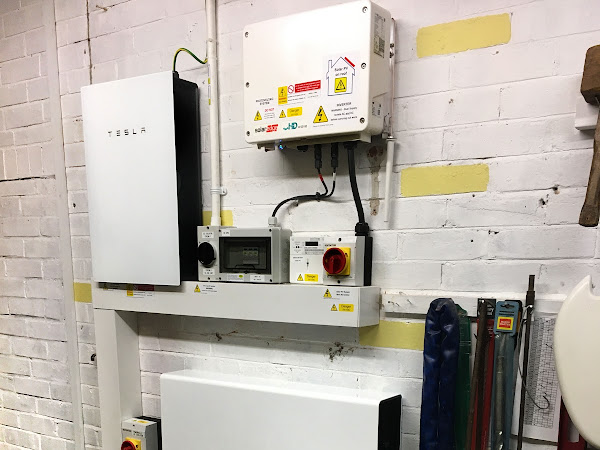
Yes. The panels and inverter may be the most recognisable parts of a solar system, but the installation requires additional equipment.
Depending on the property and system design, this may include:
- Roof mounting equipment
- DC cabling
- AC cabling
- Isolators
- Electrical protection
- Generation meter or associated metering equipment
- Monitoring hardware
- Battery mounting equipment
- Labelling and commissioning requirements
Not every quotation will list every small component individually, but significant equipment and installation work should be clear.
If something is excluded, that should also be stated rather than left ambiguous.

What type of property do you have?

Detached House

Semi Detached House

Terraced House

Flat or Apartment
Bungalow
It just takes 2 minutes
And then you can book a free consultation
What should the installation price cover?
A total price is more useful when the scope of work is explained.
Check whether the quotation includes:
- Site survey and system design
- Scaffolding where required
- Panel mounting
- Inverter installation
- Battery installation, if applicable
- Electrical connections
- System commissioning
- Monitoring setup
- Relevant certification and documentation
- Removal of installation waste
The exact scope will depend on the property and system.
If two quotations have different prices, check whether they are actually offering the same installation scope before assuming that one system is more expensive.
How should estimated solar generation be presented?
Annual generation estimates can be useful, but they should be treated as estimates rather than guarantees.
A quotation may provide an expected annual generation figure based on the proposed system, roof orientation, shading and other design assumptions.
Look for the assumptions behind the estimate.
For example:
- Roof orientation
- Roof pitch
- Shading
- Panel quantity
- Panel orientation
- Estimated system losses
- Local irradiation assumptions
A quotation that provides both the system capacity and the assumptions behind the generation estimate gives you more context when reviewing the proposal.
What about warranties?
Warranty information should be easy to identify.
There may be several different warranties rather than one overall warranty covering everything.
These can include:
- Panel product warranty
- Panel performance warranty
- Inverter warranty
- Battery warranty
- Mounting equipment warranty
- Installation workmanship warranty
The terms can differ significantly between manufacturers and installers.
Do not assume that a long panel performance warranty means every part of the installation has the same coverage. Ask which company provides each warranty and what conditions apply.
Can you compare a solar quotation using a checklist?
A simple checklist can help you compare proposals without overlooking important details.
| Check | Quote 1 | Quote 2 |
| Panel manufacturer/model | ||
| Number of panels | ||
| Panel wattage | ||
| Total system capacity | ||
| Inverter model | ||
| Battery model | ||
| Usable battery capacity | ||
| Mounting system | ||
| Monitoring | ||
| Installation scope | ||
| Product warranties | ||
| Workmanship warranty | ||
| Estimated annual generation | ||
| Total price |
This approach can reveal why two proposals differ.
It also prevents the headline price from becoming the only factor in your comparison.
What does an instant quote tell you?
A solar and battery instant quote can be useful as an initial indication of what a system might cost. However, an instant figure should not necessarily be treated as a final installation specification.
A property’s roof, electrical setup, shading, access and intended system configuration can all affect the final design.
Before proceeding, check whether the initial estimate has been followed by an appropriate assessment and detailed proposal.
A quotation based on a proper system design can provide considerably more useful information than a generic figure generated without detailed property information.
What questions should you ask before accepting a quote?
Before signing, consider asking:
- Which exact panels are included?
- What is the total solar array capacity?
- Which inverter model is proposed?
- Is battery storage included?
- What is the battery’s usable capacity?
- What is the maximum battery power?
- What installation work is included?
- Are scaffolding and other access requirements included?
- What warranties apply?
- What assumptions were used for annual generation?
- What happens if the final site survey changes the design?
Clear answers can help you understand the proposal before making a commitment.
Understanding Your Solar Installation Quote
A useful quotation should tell you more than the final price. It should explain what equipment is being installed, how much solar capacity is proposed, what battery storage provides and what installation work is included.
When comparing a solar installation quote cambridge homeowners receive, look at the complete specification rather than focusing on panel numbers or total cost alone.
A clear proposal gives you the information needed to ask sensible questions and understand the system before installation.
Related articles

What type of property do you have?
Detached House
Semi Detached House
Terraced House
Flat or Apartment
Bungalow
At a glance
A detailed solar installation quote Cambridge homeowners receive should make the proposed system understandable. This means identifying the major components, showing relevant capacities and making clear what is included within the installation.
This becomes particularly important when comparing several quotations. Two systems can have the same number of panels but use different panel models, inverters, mounting equipment or battery technology.
What should a solar quotation name?
The major components should be identified by manufacturer and model wherever possible. This allows you to understand the actual equipment being proposed rather than comparing generic descriptions.
A useful quotation should normally identify:
- Solar panel manufacturer and model
- Number of panels
- Panel output in watts
- Inverter manufacturer and model
- Inverter capacity
- Battery manufacturer and model, if included
- Battery usable capacity
- Mounting system
- Monitoring equipment or platform
- Major electrical protection and associated equipment
For example, “12 solar panels and battery storage” provides considerably less information than a quotation that identifies the panel model, total array capacity, inverter specification and battery capacity.
Why should panel size and total capacity be shown?
The number of panels is only part of the story.
A quotation should ideally show both the number of panels and their individual rated output. This allows you to calculate the total nominal array capacity.
For example:
| Panel quantity | Panel rating | Total nominal array |
| 10 | 400W | 4.0kWp |
| 12 | 400W | 4.8kWp |
| 12 | 450W | 5.4kWp |
| 14 | 450W | 6.3kWp |
The actual energy produced over a year will depend on factors such as roof orientation, pitch, shading, location and system losses. The kWp figure therefore should not be confused with annual generation.
A clear quotation should distinguish between the system’s rated capacity and any estimated annual output.
What inverter information should be included?
The inverter is a major component and should not be hidden behind a generic description.
The quotation should identify the manufacturer and model, together with its relevant capacity and, where appropriate, information about the number of MPPT inputs and battery compatibility.
The inverter specification can affect how the solar array is configured and how the system interacts with storage.
You may want to check:
- Rated AC output
- Maximum DC input
- MPPT configuration
- Maximum input voltage and current
- Battery compatibility
- Monitoring capabilities
- Product warranty
A larger inverter is not automatically necessary. Its specification should relate to the proposed solar array and the overall system design.
If a battery is included, what should be priced?
Battery storage adds several specifications that should be visible in the quotation.
Capacity is normally expressed in kWh, but it is useful to distinguish between nominal capacity and usable capacity. The usable figure gives a clearer indication of the energy available for practical household use.
The quotation should also explain relevant power ratings.
|
Battery detail |
Why it matters |
|
Nominal capacity |
Total stated battery storage |
|
Usable capacity |
Energy available for normal use |
|
Maximum charge power |
How quickly the battery can accept energy |
|
Maximum discharge power |
How quickly it can supply energy |
|
Warranty |
Product coverage and conditions |
|
Expansion capability |
Whether additional storage may be supported |
Battery power and capacity are not interchangeable. A battery can have substantial storage capacity while having a different maximum discharge rate.
For homeowners considering storage, these details can make battery quotations much easier to compare.
Should installation equipment be listed?
Yes. The panels and inverter may be the most recognisable parts of a solar system, but the installation requires additional equipment.
Depending on the property and system design, this may include:
- Roof mounting equipment
- DC cabling
- AC cabling
- Isolators
- Electrical protection
- Generation meter or associated metering equipment
- Monitoring hardware
- Battery mounting equipment
- Labelling and commissioning requirements
Not every quotation will list every small component individually, but significant equipment and installation work should be clear.
If something is excluded, that should also be stated rather than left ambiguous.
What type of property do you have?
Detached House
Semi Detached House
Terraced House
Flat or Apartment
Bungalow
It just takes 2 minutes
And then you can book a free consultation
What should the installation price cover?
A total price is more useful when the scope of work is explained.
Check whether the quotation includes:
- Site survey and system design
- Scaffolding where required
- Panel mounting
- Inverter installation
- Battery installation, if applicable
- Electrical connections
- System commissioning
- Monitoring setup
- Relevant certification and documentation
- Removal of installation waste
The exact scope will depend on the property and system.
If two quotations have different prices, check whether they are actually offering the same installation scope before assuming that one system is more expensive.
How should estimated solar generation be presented?
Annual generation estimates can be useful, but they should be treated as estimates rather than guarantees.
A quotation may provide an expected annual generation figure based on the proposed system, roof orientation, shading and other design assumptions.
Look for the assumptions behind the estimate.
For example:
- Roof orientation
- Roof pitch
- Shading
- Panel quantity
- Panel orientation
- Estimated system losses
- Local irradiation assumptions
A quotation that provides both the system capacity and the assumptions behind the generation estimate gives you more context when reviewing the proposal.
What about warranties?
Warranty information should be easy to identify.
There may be several different warranties rather than one overall warranty covering everything.
These can include:
- Panel product warranty
- Panel performance warranty
- Inverter warranty
- Battery warranty
- Mounting equipment warranty
- Installation workmanship warranty
The terms can differ significantly between manufacturers and installers.
Do not assume that a long panel performance warranty means every part of the installation has the same coverage. Ask which company provides each warranty and what conditions apply.
Can you compare a solar quotation using a checklist?
A simple checklist can help you compare proposals without overlooking important details.
| Check | Quote 1 | Quote 2 |
| Panel manufacturer/model | ||
| Number of panels | ||
| Panel wattage | ||
| Total system capacity | ||
| Inverter model | ||
| Battery model | ||
| Usable battery capacity | ||
| Mounting system | ||
| Monitoring | ||
| Installation scope | ||
| Product warranties | ||
| Workmanship warranty | ||
| Estimated annual generation | ||
| Total price |
This approach can reveal why two proposals differ.
It also prevents the headline price from becoming the only factor in your comparison.
What does an instant quote tell you?
A solar and battery instant quote can be useful as an initial indication of what a system might cost. However, an instant figure should not necessarily be treated as a final installation specification.
A property’s roof, electrical setup, shading, access and intended system configuration can all affect the final design.
Before proceeding, check whether the initial estimate has been followed by an appropriate assessment and detailed proposal.
A quotation based on a proper system design can provide considerably more useful information than a generic figure generated without detailed property information.
What questions should you ask before accepting a quote?
Before signing, consider asking:
- Which exact panels are included?
- What is the total solar array capacity?
- Which inverter model is proposed?
- Is battery storage included?
- What is the battery’s usable capacity?
- What is the maximum battery power?
- What installation work is included?
- Are scaffolding and other access requirements included?
- What warranties apply?
- What assumptions were used for annual generation?
- What happens if the final site survey changes the design?
Clear answers can help you understand the proposal before making a commitment.
Understanding Your Solar Installation Quote
A useful quotation should tell you more than the final price. It should explain what equipment is being installed, how much solar capacity is proposed, what battery storage provides and what installation work is included.
When comparing a solar installation quote cambridge homeowners receive, look at the complete specification rather than focusing on panel numbers or total cost alone.
A clear proposal gives you the information needed to ask sensible questions and understand the system before installation.
Related articles


What type of property do you have?
Detached House
Semi Detached House
Terraced House
Flat or Apartment
Bungalow
