

Solar Panels, Inverters and Batteries: How the Main Components Work Together
Solar panels are only one part of a modern renewable energy system. The panels generate electricity, but an inverter is needed to make that electricity usable in the home, while a battery can store surplus energy for later. How these components are selected and connected can have a significant effect on how the whole system operates.

Why you can trust our content
We know that the solar industry is full of misinformation, but we only use reliable sources, including:





At a glance
For homeowners considering solar and battery installation cambridge, understanding the relationship between the main components makes it easier to compare system designs and ask useful questions before installation. The goal is not simply to choose the biggest or most expensive equipment, but to create a system where the individual parts work properly together.
If you are considering solar for your home, our team at Cambridge Solar can provide expert guidance on system design and component compatibility. You can request a bespoke quote based on your property and energy requirements.
What Does Each Part of a Solar and Battery System Do?
A typical domestic system has three main electrical components: solar panels, an inverter and, where included, a battery.
| Component | Main role | What affects its specification? |
| Solar panels | Generate electricity from sunlight | Roof space, orientation, shading and energy requirements |
| Inverter | Converts and manages electricity | Panel array size, electrical design and battery compatibility |
| Battery | Stores surplus electricity | Usable capacity, power rating, usage patterns and system design |
Solar panels produce direct current (DC) electricity. Most household appliances use alternating current (AC), so the inverter plays an important role in converting the electricity into a form that can be used around the property.
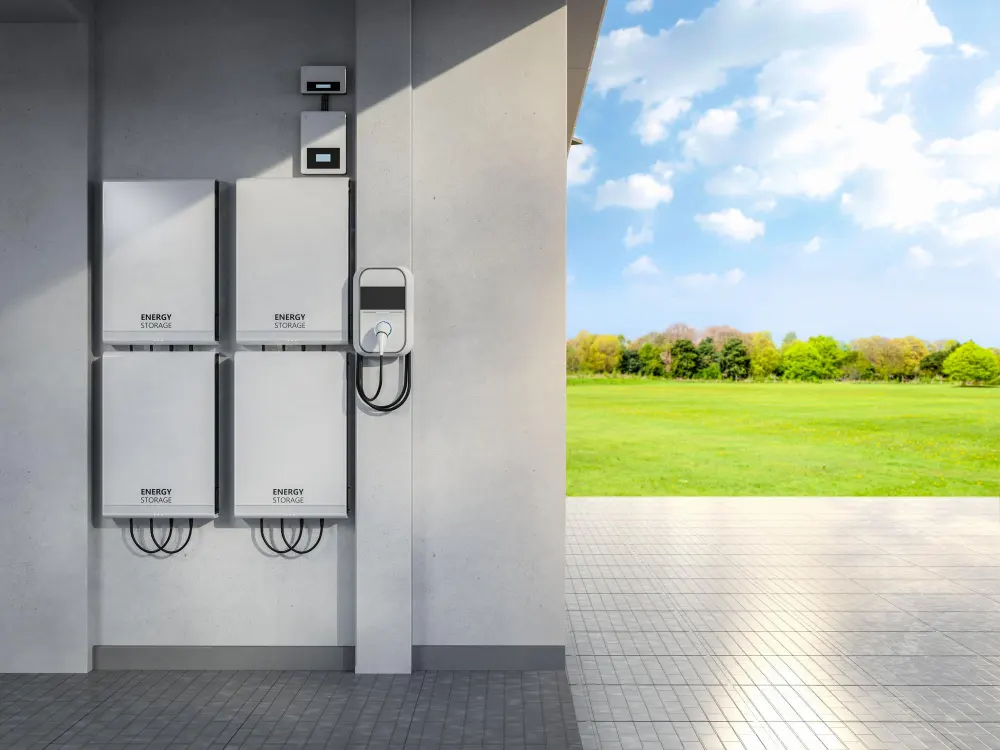
A battery adds another part to the process. Instead of sending all surplus solar electricity to the grid, some of it can be stored and used later, such as during the evening when the panels are no longer generating.
This means a well-designed system needs more than suitable individual products. The components need to be compatible with one another.
How Do Solar Panels, Inverters and Batteries Work Together?
The easiest way to understand a solar and battery system is to follow the electricity as it moves through the installation.
During daylight hours, the solar panels generate electricity. The inverter manages this electricity and converts it into a form that household appliances can use. If generation is higher than the property’s immediate demand, surplus electricity can be directed towards a compatible battery.
Once the battery reaches its available capacity, additional surplus may be exported to the grid, depending on the system configuration and the homeowner’s arrangements.
Later in the day, when solar generation falls, stored battery energy can be used to help supply household demand. The exact operation depends on the inverter, battery settings, electricity consumption and overall system design.
For solar cambridge homeowners, this relationship is particularly important when comparing quotations. Two systems may have a similar panel capacity but use different inverter and battery arrangements, giving them different specifications and operating characteristics.
Why Is the Inverter So Important?
The inverter is a key part of a solar installation because it manages the conversion of electricity and, depending on the system, the interaction between generation, household demand, battery storage and the grid.
Its functions can include:
- Converting DC electricity from solar panels into AC electricity.
- Managing electricity flowing to and from a compatible battery.
- Monitoring system performance.
- Controlling energy flows within the installation.
- Supporting safe and efficient operation.
Inverter selection should not be considered separately from the panels and battery.
An appropriately specified inverter can be matched to the size of the solar array and the requirements of the wider installation. Where battery storage is included, its compatibility with the inverter also needs to be established before the equipment is selected.
This is why professional system design considers the complete installation rather than treating every product as an isolated purchase.
What Changes When a Battery Is Added?
A battery changes how surplus solar electricity can be used.
Without battery storage, solar electricity is generally used by the property when it is generated, with surplus potentially exported to the grid. With a battery, some surplus generation can instead be stored for use at another time.
For example, imagine a household where electricity demand is relatively low during a sunny afternoon because the occupants are away. The solar panels may generate more electricity than the property immediately requires. A compatible battery can store some of that surplus.
When the household returns later and electricity demand increases, stored energy can be used according to the system’s control settings.
Battery performance depends on more than its headline capacity. Usable capacity, power output, charging and discharging characteristics, inverter compatibility and expansion options can all influence the overall design.
Why Does the Connection Between the Battery and Solar System Matter?
Battery systems can be connected to a solar installation in different ways. Two common approaches are AC coupling and DC coupling.
With an AC-coupled arrangement, the battery system connects on the AC side of the installation. This can be useful when storage is being added to an existing solar system because the battery may operate with its own relevant conversion equipment.
With DC coupling, the battery connects on the DC side of the system and can form part of a more integrated solar and storage arrangement. The appropriate configuration depends on the equipment being used and how the complete system has been designed.
Neither arrangement should be selected simply because one sounds more advanced. The property, existing equipment, planned solar capacity, battery requirements and potential future changes all need to be considered.
This is especially relevant when arranging solar and battery installation cambridge for an existing property. A battery being capable of storing solar electricity does not automatically mean it is compatible with every existing inverter or solar configuration.

What type of property do you have?

Detached House

Semi Detached House

Terraced House

Flat or Apartment
Bungalow
It just takes 2 minutes
And then you can book a free consultation
Does a Larger System Automatically Mean a Better System?
Not necessarily.
Solar system design is about matching generation and storage to the property rather than maximising every specification.
For example, a large battery may not provide useful additional capacity if a household does not regularly generate enough surplus solar electricity to charge it. Likewise, adding more panels than the available roof space or electrical design can sensibly accommodate may not be appropriate.
A suitable design should consider:
- Current electricity consumption.
- When electricity is normally used.
- Available roof space.
- Roof orientation and pitch.
- Potential shading.
- Existing electrical equipment.
- Whether battery storage is required immediately.
- Whether future expansion may be useful.
The objective is to create a system that reflects the property’s actual energy requirements.
If you are unsure whether a proposed combination of panels, inverter and battery is suitable, speak to Cambridge Solar. Reviewing the complete specification before installation can help identify compatibility considerations early.
What Should Homeowners Check Before Choosing Components?
When comparing solar and battery installation cambridge quotations, it is useful to look beyond the number of panels or the advertised battery capacity.
A detailed quotation should make it reasonably clear what equipment is being proposed and how the individual components will work together.
Check whether the quotation identifies:
- The solar panel manufacturer and model.
- The total installed panel capacity.
- The inverter manufacturer, model and capacity.
- The battery manufacturer and model, if storage is included.
- The battery’s usable capacity rather than only its nominal capacity.
- Whether additional battery capacity can be added later.
- Monitoring or control equipment included in the installation.
- Electrical and installation work included in the quoted price.
- Product warranties and workmanship cover.
- Any assumptions about the property’s existing electrical installation.
These details make it much easier to compare different proposals.
A quotation that simply states “solar panels and battery” gives considerably less information than one that identifies the actual equipment and explains how the components are intended to be configured.
Can a Solar System Be Designed With Future Changes in Mind?
Yes. Future compatibility can be considered during the original system design.
A homeowner may not require a large battery today but could want additional storage in the future. Electricity usage may also change if the household adds an electric vehicle or other electrical technologies.
Planning for future changes does not necessarily mean installing an oversized system from day one. Instead, homeowners can ask whether the selected equipment supports sensible future additions or changes.
Useful questions include:
- Can additional battery capacity be added?
- Is the inverter suitable for the planned solar array?
- Are future components compatible with the proposed equipment?
- Does the monitoring system provide useful information about generation and consumption?
- Would future changes require existing equipment to be replaced?
Thinking about these points before installation can help avoid unnecessary changes later.
A Typical Cambridge Home Scenario
Consider a typical Cambridge family home with a suitable roof, reasonable available roof space and higher electricity consumption during the evening.
During the day, the property may generate more solar electricity than it immediately needs. Instead of allowing all surplus generation to be exported, a compatible battery could store some of that energy for later use.
The inverter then needs to manage the relationship between solar generation, household demand, battery charging and electricity export. If the household’s energy requirements change in future, the original system design and battery expansion options may become important.
This example demonstrates why compatibility is not simply a technical detail. It can influence how practical the system remains as the household’s energy needs develop.
Bringing the Whole System Together
Solar panels, inverters and batteries each perform different jobs, but they ultimately form one connected energy system. Panel output, inverter capacity, battery characteristics and household electricity use all need to be considered together.
For homeowners researching solar cambridge, one of the most useful principles is to compare the complete system specification rather than focusing on a single headline feature.
Cambridge Solar can help homeowners understand the available system options and how different components can work together. If you are planning an installation, contact our team to discuss your property and request tailored advice.
A carefully specified system does not need to be the largest or most expensive option. It needs to be appropriately designed, compatible with its components and suitable for the way the property uses electricity today, while allowing sensible consideration of future requirements.
Cambridge Solar can provide practical guidance on the equipment and system configuration, helping homeowners understand what is being proposed before installation goes ahead.
Related articles


What type of property do you have?
Detached House
Semi Detached House
Terraced House
Flat or Apartment
Bungalow
At a glance
For homeowners considering solar and battery installation cambridge, understanding the relationship between the main components makes it easier to compare system designs and ask useful questions before installation. The goal is not simply to choose the biggest or most expensive equipment, but to create a system where the individual parts work properly together.
If you are considering solar for your home, our team at Cambridge Solar can provide expert guidance on system design and component compatibility. You can request a bespoke quote based on your property and energy requirements.
What Does Each Part of a Solar and Battery System Do?
A typical domestic system has three main electrical components: solar panels, an inverter and, where included, a battery.
| Component | Main role | What affects its specification? |
| Solar panels | Generate electricity from sunlight | Roof space, orientation, shading and energy requirements |
| Inverter | Converts and manages electricity | Panel array size, electrical design and battery compatibility |
| Battery | Stores surplus electricity | Usable capacity, power rating, usage patterns and system design |
Solar panels produce direct current (DC) electricity. Most household appliances use alternating current (AC), so the inverter plays an important role in converting the electricity into a form that can be used around the property.
A battery adds another part to the process. Instead of sending all surplus solar electricity to the grid, some of it can be stored and used later, such as during the evening when the panels are no longer generating.
This means a well-designed system needs more than suitable individual products. The components need to be compatible with one another.
How Do Solar Panels, Inverters and Batteries Work Together?
The easiest way to understand a solar and battery system is to follow the electricity as it moves through the installation.
During daylight hours, the solar panels generate electricity. The inverter manages this electricity and converts it into a form that household appliances can use. If generation is higher than the property’s immediate demand, surplus electricity can be directed towards a compatible battery.
Once the battery reaches its available capacity, additional surplus may be exported to the grid, depending on the system configuration and the homeowner’s arrangements.
Later in the day, when solar generation falls, stored battery energy can be used to help supply household demand. The exact operation depends on the inverter, battery settings, electricity consumption and overall system design.
For solar cambridge homeowners, this relationship is particularly important when comparing quotations. Two systems may have a similar panel capacity but use different inverter and battery arrangements, giving them different specifications and operating characteristics.
Why Is the Inverter So Important?
The inverter is a key part of a solar installation because it manages the conversion of electricity and, depending on the system, the interaction between generation, household demand, battery storage and the grid.
Its functions can include:
- Converting DC electricity from solar panels into AC electricity.
- Managing electricity flowing to and from a compatible battery.
- Monitoring system performance.
- Controlling energy flows within the installation.
- Supporting safe and efficient operation.
Inverter selection should not be considered separately from the panels and battery.
An appropriately specified inverter can be matched to the size of the solar array and the requirements of the wider installation. Where battery storage is included, its compatibility with the inverter also needs to be established before the equipment is selected.
This is why professional system design considers the complete installation rather than treating every product as an isolated purchase.
What Changes When a Battery Is Added?
A battery changes how surplus solar electricity can be used.
Without battery storage, solar electricity is generally used by the property when it is generated, with surplus potentially exported to the grid. With a battery, some surplus generation can instead be stored for use at another time.
For example, imagine a household where electricity demand is relatively low during a sunny afternoon because the occupants are away. The solar panels may generate more electricity than the property immediately requires. A compatible battery can store some of that surplus.
When the household returns later and electricity demand increases, stored energy can be used according to the system’s control settings.
Battery performance depends on more than its headline capacity. Usable capacity, power output, charging and discharging characteristics, inverter compatibility and expansion options can all influence the overall design.
Why Does the Connection Between the Battery and Solar System Matter?
Battery systems can be connected to a solar installation in different ways. Two common approaches are AC coupling and DC coupling.
With an AC-coupled arrangement, the battery system connects on the AC side of the installation. This can be useful when storage is being added to an existing solar system because the battery may operate with its own relevant conversion equipment.
With DC coupling, the battery connects on the DC side of the system and can form part of a more integrated solar and storage arrangement. The appropriate configuration depends on the equipment being used and how the complete system has been designed.
Neither arrangement should be selected simply because one sounds more advanced. The property, existing equipment, planned solar capacity, battery requirements and potential future changes all need to be considered.
This is especially relevant when arranging solar and battery installation cambridge for an existing property. A battery being capable of storing solar electricity does not automatically mean it is compatible with every existing inverter or solar configuration.
What type of property do you have?
Detached House
Semi Detached House
Terraced House
Flat or Apartment
Bungalow
It just takes 2 minutes
And then you can book a free consultation
Does a Larger System Automatically Mean a Better System?
Not necessarily.
Solar system design is about matching generation and storage to the property rather than maximising every specification.
For example, a large battery may not provide useful additional capacity if a household does not regularly generate enough surplus solar electricity to charge it. Likewise, adding more panels than the available roof space or electrical design can sensibly accommodate may not be appropriate.
A suitable design should consider:
- Current electricity consumption.
- When electricity is normally used.
- Available roof space.
- Roof orientation and pitch.
- Potential shading.
- Existing electrical equipment.
- Whether battery storage is required immediately.
- Whether future expansion may be useful.
The objective is to create a system that reflects the property’s actual energy requirements.
If you are unsure whether a proposed combination of panels, inverter and battery is suitable, speak to Cambridge Solar. Reviewing the complete specification before installation can help identify compatibility considerations early.
What Should Homeowners Check Before Choosing Components?
When comparing solar and battery installation cambridge quotations, it is useful to look beyond the number of panels or the advertised battery capacity.
A detailed quotation should make it reasonably clear what equipment is being proposed and how the individual components will work together.
Check whether the quotation identifies:
- The solar panel manufacturer and model.
- The total installed panel capacity.
- The inverter manufacturer, model and capacity.
- The battery manufacturer and model, if storage is included.
- The battery’s usable capacity rather than only its nominal capacity.
- Whether additional battery capacity can be added later.
- Monitoring or control equipment included in the installation.
- Electrical and installation work included in the quoted price.
- Product warranties and workmanship cover.
- Any assumptions about the property’s existing electrical installation.
These details make it much easier to compare different proposals.
A quotation that simply states “solar panels and battery” gives considerably less information than one that identifies the actual equipment and explains how the components are intended to be configured.
Can a Solar System Be Designed With Future Changes in Mind?
Yes. Future compatibility can be considered during the original system design.
A homeowner may not require a large battery today but could want additional storage in the future. Electricity usage may also change if the household adds an electric vehicle or other electrical technologies.
Planning for future changes does not necessarily mean installing an oversized system from day one. Instead, homeowners can ask whether the selected equipment supports sensible future additions or changes.
Useful questions include:
- Can additional battery capacity be added?
- Is the inverter suitable for the planned solar array?
- Are future components compatible with the proposed equipment?
- Does the monitoring system provide useful information about generation and consumption?
- Would future changes require existing equipment to be replaced?
Thinking about these points before installation can help avoid unnecessary changes later.
A Typical Cambridge Home Scenario
Consider a typical Cambridge family home with a suitable roof, reasonable available roof space and higher electricity consumption during the evening.
During the day, the property may generate more solar electricity than it immediately needs. Instead of allowing all surplus generation to be exported, a compatible battery could store some of that energy for later use.
The inverter then needs to manage the relationship between solar generation, household demand, battery charging and electricity export. If the household’s energy requirements change in future, the original system design and battery expansion options may become important.
This example demonstrates why compatibility is not simply a technical detail. It can influence how practical the system remains as the household’s energy needs develop.
Bringing the Whole System Together
Solar panels, inverters and batteries each perform different jobs, but they ultimately form one connected energy system. Panel output, inverter capacity, battery characteristics and household electricity use all need to be considered together.
For homeowners researching solar cambridge, one of the most useful principles is to compare the complete system specification rather than focusing on a single headline feature.
Cambridge Solar can help homeowners understand the available system options and how different components can work together. If you are planning an installation, contact our team to discuss your property and request tailored advice.
A carefully specified system does not need to be the largest or most expensive option. It needs to be appropriately designed, compatible with its components and suitable for the way the property uses electricity today, while allowing sensible consideration of future requirements.
Cambridge Solar can provide practical guidance on the equipment and system configuration, helping homeowners understand what is being proposed before installation goes ahead.
Related articles

What type of property do you have?
Detached House
Semi Detached House
Terraced House
Flat or Apartment
Bungalow
