

Does Better Hardware Always Mean a Higher Solar Cost? What Actually Changes the Specification?
When comparing solar quotations, it can be tempting to assume that better equipment automatically means a much higher price. In reality, the relationship between equipment specification and total project cost is more complicated.

Why you can trust our content
We know that the solar industry is full of misinformation, but we only use reliable sources, including:





At a glance
A solar system is made up of several connected parts, and each one has a role in the overall design. Panel technology, inverter capacity, battery storage, roof layout, electrical work and installation requirements can all change what is needed.
Understanding these factors makes it easier to assess solar cost cambridge homeowners may encounter and distinguish between a genuinely different specification and a quotation that simply uses more expensive equipment.
If you are comparing solar quotations and want to understand what is included, Cambridge Solar can explain the specification and installation requirements in straightforward terms. Contact our team for tailored guidance.
What Actually Determines the Price of a Solar System?
There is no single figure that applies to every home because solar installations are designed around individual properties.
The main factors can include:
- Number and type of solar panels.
- Total panel capacity.
- Inverter specification.
- Battery capacity and power rating.
- Roof size and configuration.
- Roof orientation and shading.
- Scaffolding and access requirements.
- Electrical installation work.
- Monitoring equipment.
- Additional components and protection.
- Labour and commissioning.
Two homes with similar electricity consumption can therefore receive different quotations because their roofs, electrical systems and installation requirements are not identical.
The equipment itself is only part of the overall project.
Does More Expensive Hardware Always Improve the System?
Not necessarily.
A higher-priced component may offer features that are useful for one property but unnecessary for another. For example, a more sophisticated inverter may provide additional monitoring or functionality, but if those features do not address a particular requirement, their practical value may be limited.
The same applies to solar panels and batteries. A higher headline specification does not automatically mean that a system is better matched to a household.
The more useful question is whether the equipment is appropriate for the property and the intended use.
This is why homeowners researching solar cost cambridge should compare complete system specifications rather than focusing only on the price of an individual component.
Which Solar Panel Features Can Change the Specification?
Solar panels can differ in several ways, including physical size, efficiency, power output, technology and warranty terms.
Panel efficiency describes how effectively a panel converts available sunlight into electricity under specified test conditions. Higher efficiency can be particularly useful where roof space is limited because more generation can potentially be achieved from a given area.
However, efficiency is not the only consideration.
The designer may also need to consider:
- Available roof area.
- Panel dimensions.
- Roof layout.
- Orientation.
- Shading.
- Total required system capacity.
- Visual appearance.
- Manufacturer specifications.
- Warranty provisions.
For a large roof with plenty of usable space, the practical difference between two panel efficiencies may be less important than it would be for a small or restricted roof.
How Does the Inverter Affect Solar Cost?
The inverter is another important part of the specification.
Its capacity needs to be appropriate for the solar array and the wider electrical system. If battery storage is included, the inverter also needs to support the intended battery configuration or work with suitable additional equipment.
Different inverters may offer features such as:
- System monitoring.
- Battery management.
- Different installation configurations.
- Varying power ratings.
- Specific manufacturer ecosystems.
- Expansion options.
A quotation should identify the inverter model rather than simply describing it as a “solar inverter”.
That detail allows homeowners to understand what has actually been specified and whether two quotations are genuinely comparable.
Does Adding a Battery Make a Solar System Much More Expensive?
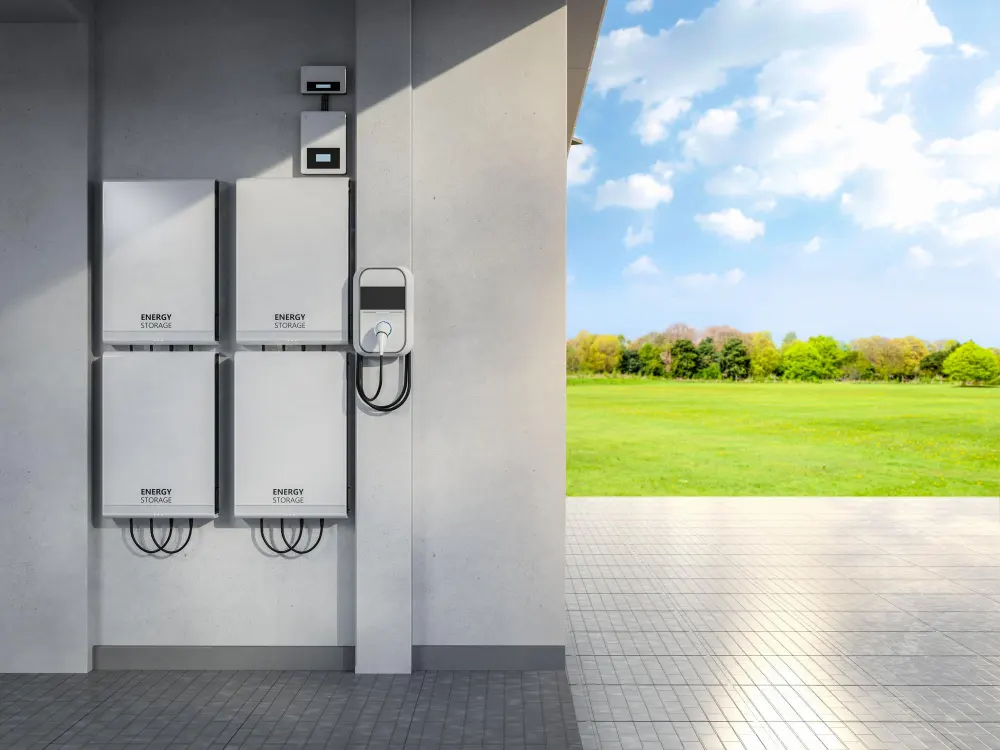
Battery storage adds equipment and installation requirements, so it will generally increase the initial project cost compared with a solar-only system.
However, battery specifications vary considerably.
The headline capacity is only one part of the picture. Homeowners should also consider usable capacity, power output, charging and discharging characteristics, compatibility and whether the system can be expanded.
| Component | Specification to compare | Why it matters |
| Solar panels | Power and efficiency | Influences generation and roof-space requirements |
| Inverter | Capacity and features | Manages conversion and system operation |
| Battery | Usable capacity and power | Determines stored energy and delivery capability |
| Mounting system | Roof compatibility | Affects installation and positioning |
| Monitoring | Level of system information | Helps track generation and energy use |
A larger battery is not automatically a more suitable battery. The appropriate size depends on the household’s consumption, solar generation and how electricity is used throughout the day.
What Can Make Installation More Expensive Even With the Same Hardware?
This is an important distinction when comparing quotations.
Two installers could specify identical panels, inverter and battery but provide different total prices because the installation conditions are different.
Factors can include:
- Difficult roof access.
- Scaffolding requirements.
- Longer cable runs.
- Complex roof layouts.
- Additional electrical protection.
- Consumer unit or electrical upgrades.
- Specialist mounting requirements.
- Additional labour.
- More complicated commissioning.
For example, a straightforward roof with easy access may require less installation work than a property with multiple roof sections and limited access.
This means solar cost cambridge should not be judged solely by comparing equipment lists.
The installation method and property-specific requirements are part of the specification too.

What type of property do you have?

Detached House

Semi Detached House

Terraced House

Flat or Apartment
Bungalow
It just takes 2 minutes
And then you can book a free consultation
Is the Average Cost of Solar a Useful Guide?
Searches for the average cost of solar cambridge can provide a starting point, but averages should be treated carefully.
Averages combine different system sizes, panel technologies, battery options, property types and installation conditions. They therefore cannot tell a homeowner exactly what their own system should cost.
A more useful comparison is based on a clearly defined specification.
For example, compare:
- Total solar capacity.
- Number and model of panels.
- Inverter model and capacity.
- Battery model and usable capacity.
- Installation work.
- Monitoring.
- Warranty provisions.
- Any electrical upgrades.
- Scaffolding or access requirements.
- Commissioning and certification.
This creates a more meaningful comparison than looking at one average figure.
Does a Higher Specification Always Need to Be Bigger?
No.
A better-specified system can mean equipment that is more appropriately matched to the property, rather than equipment with the largest possible capacity.
For instance, a homeowner with limited roof space may benefit from panels with higher efficiency rather than simply trying to install more panels.
Similarly, a household with modest evening electricity consumption may not need the largest battery available.
System design should therefore consider the relationship between components.
If a quotation includes several hardware upgrades, ask what each change is intended to achieve. Cambridge Solar can explain the practical differences between specifications so you can understand the reasoning behind the proposed equipment.
What Should You Look for When Comparing Two Quotes?
Imagine two quotations with noticeably different prices. The first step should be to identify exactly what is different.
Create a simple comparison using:
- Panel manufacturer and model.
- Number of panels.
- Total panel capacity.
- Panel efficiency.
- Inverter model.
- Battery model and usable capacity.
- Monitoring system.
- Mounting equipment.
- Electrical work.
- Labour, commissioning and certification.
- Warranty terms.
- Any optional extras.
Once these details are listed side by side, the price difference may become much easier to understand.
One quotation might include a larger battery. Another might include more complex electrical work. A third may use different panel technology.
Without these details, comparing only the final price can be misleading.
A Typical Cambridge Home Example
Consider a three-bedroom home with a suitable roof but relatively modest electricity consumption.
The homeowner receives two proposals. One includes a higher-capacity battery and a premium inverter, while another uses a smaller battery and a different inverter configuration.
The more expensive proposal is not automatically more suitable. The homeowner needs to consider whether the additional capacity and features correspond with actual electricity use and future plans.
A detailed assessment could reveal that the difference is related to storage capacity rather than solar generation, giving the homeowner a clearer basis for comparing the two designs.
What Questions Should You Ask About the Price?
A useful solar quotation should be understandable without requiring the homeowner to guess what has been included.
Ask:
- What panel models are included?
- What is the total system capacity?
- Which inverter is being proposed?
- Is battery storage included?
- What is the battery’s usable capacity?
- What installation work is included?
- Are scaffolding and electrical work included?
- What monitoring is provided?
- Which warranties apply?
- Are there any additional costs that could arise after the survey?
Clear answers help turn a headline price into a meaningful project specification.
Looking Beyond the Headline Price
The cost of a solar installation is shaped by much more than whether a product is labelled premium or standard. The property itself, system capacity, component compatibility and installation requirements all contribute to the final specification.
For homeowners assessing solar cost cambridge, the most useful approach is to compare complete, clearly defined proposals. Look at the panels, inverter, battery, installation work and warranties together rather than judging the project from one figure.
Cambridge Solar can help you understand what different system specifications mean for your property. If you are considering solar or comparing quotations, contact our team to discuss the options and request a tailored proposal.
A carefully designed solar system does not need to contain the most expensive hardware available. It needs components that are suitably matched to the property, installed correctly and specified around the household’s energy requirements.
Understanding what changes the specification gives homeowners a clearer way to assess quotations and ask the right questions before committing to an installation.
Related articles


What type of property do you have?
Detached House
Semi Detached House
Terraced House
Flat or Apartment
Bungalow
At a glance
A solar system is made up of several connected parts, and each one has a role in the overall design. Panel technology, inverter capacity, battery storage, roof layout, electrical work and installation requirements can all change what is needed.
Understanding these factors makes it easier to assess solar cost cambridge homeowners may encounter and distinguish between a genuinely different specification and a quotation that simply uses more expensive equipment.
If you are comparing solar quotations and want to understand what is included, Cambridge Solar can explain the specification and installation requirements in straightforward terms. Contact our team for tailored guidance.
What Actually Determines the Price of a Solar System?
There is no single figure that applies to every home because solar installations are designed around individual properties.
The main factors can include:
- Number and type of solar panels.
- Total panel capacity.
- Inverter specification.
- Battery capacity and power rating.
- Roof size and configuration.
- Roof orientation and shading.
- Scaffolding and access requirements.
- Electrical installation work.
- Monitoring equipment.
- Additional components and protection.
- Labour and commissioning.
Two homes with similar electricity consumption can therefore receive different quotations because their roofs, electrical systems and installation requirements are not identical.
The equipment itself is only part of the overall project.
Does More Expensive Hardware Always Improve the System?
Not necessarily.
A higher-priced component may offer features that are useful for one property but unnecessary for another. For example, a more sophisticated inverter may provide additional monitoring or functionality, but if those features do not address a particular requirement, their practical value may be limited.
The same applies to solar panels and batteries. A higher headline specification does not automatically mean that a system is better matched to a household.
The more useful question is whether the equipment is appropriate for the property and the intended use.
This is why homeowners researching solar cost cambridge should compare complete system specifications rather than focusing only on the price of an individual component.
Which Solar Panel Features Can Change the Specification?
Solar panels can differ in several ways, including physical size, efficiency, power output, technology and warranty terms.
Panel efficiency describes how effectively a panel converts available sunlight into electricity under specified test conditions. Higher efficiency can be particularly useful where roof space is limited because more generation can potentially be achieved from a given area.
However, efficiency is not the only consideration.
The designer may also need to consider:
- Available roof area.
- Panel dimensions.
- Roof layout.
- Orientation.
- Shading.
- Total required system capacity.
- Visual appearance.
- Manufacturer specifications.
- Warranty provisions.
For a large roof with plenty of usable space, the practical difference between two panel efficiencies may be less important than it would be for a small or restricted roof.
How Does the Inverter Affect Solar Cost?
The inverter is another important part of the specification.
Its capacity needs to be appropriate for the solar array and the wider electrical system. If battery storage is included, the inverter also needs to support the intended battery configuration or work with suitable additional equipment.
Different inverters may offer features such as:
- System monitoring.
- Battery management.
- Different installation configurations.
- Varying power ratings.
- Specific manufacturer ecosystems.
- Expansion options.
A quotation should identify the inverter model rather than simply describing it as a “solar inverter”.
That detail allows homeowners to understand what has actually been specified and whether two quotations are genuinely comparable.
Does Adding a Battery Make a Solar System Much More Expensive?
Battery storage adds equipment and installation requirements, so it will generally increase the initial project cost compared with a solar-only system.
However, battery specifications vary considerably.
The headline capacity is only one part of the picture. Homeowners should also consider usable capacity, power output, charging and discharging characteristics, compatibility and whether the system can be expanded.
| Component | Specification to compare | Why it matters |
| Solar panels | Power and efficiency | Influences generation and roof-space requirements |
| Inverter | Capacity and features | Manages conversion and system operation |
| Battery | Usable capacity and power | Determines stored energy and delivery capability |
| Mounting system | Roof compatibility | Affects installation and positioning |
| Monitoring | Level of system information | Helps track generation and energy use |
A larger battery is not automatically a more suitable battery. The appropriate size depends on the household’s consumption, solar generation and how electricity is used throughout the day.
What Can Make Installation More Expensive Even With the Same Hardware?
This is an important distinction when comparing quotations.
Two installers could specify identical panels, inverter and battery but provide different total prices because the installation conditions are different.
Factors can include:
- Difficult roof access.
- Scaffolding requirements.
- Longer cable runs.
- Complex roof layouts.
- Additional electrical protection.
- Consumer unit or electrical upgrades.
- Specialist mounting requirements.
- Additional labour.
- More complicated commissioning.
For example, a straightforward roof with easy access may require less installation work than a property with multiple roof sections and limited access.
This means solar cost cambridge should not be judged solely by comparing equipment lists.
The installation method and property-specific requirements are part of the specification too.
What type of property do you have?
Detached House
Semi Detached House
Terraced House
Flat or Apartment
Bungalow
It just takes 2 minutes
And then you can book a free consultation
Is the Average Cost of Solar a Useful Guide?
Searches for the average cost of solar cambridge can provide a starting point, but averages should be treated carefully.
Averages combine different system sizes, panel technologies, battery options, property types and installation conditions. They therefore cannot tell a homeowner exactly what their own system should cost.
A more useful comparison is based on a clearly defined specification.
For example, compare:
- Total solar capacity.
- Number and model of panels.
- Inverter model and capacity.
- Battery model and usable capacity.
- Installation work.
- Monitoring.
- Warranty provisions.
- Any electrical upgrades.
- Scaffolding or access requirements.
- Commissioning and certification.
This creates a more meaningful comparison than looking at one average figure.
Does a Higher Specification Always Need to Be Bigger?
No.
A better-specified system can mean equipment that is more appropriately matched to the property, rather than equipment with the largest possible capacity.
For instance, a homeowner with limited roof space may benefit from panels with higher efficiency rather than simply trying to install more panels.
Similarly, a household with modest evening electricity consumption may not need the largest battery available.
System design should therefore consider the relationship between components.
If a quotation includes several hardware upgrades, ask what each change is intended to achieve. Cambridge Solar can explain the practical differences between specifications so you can understand the reasoning behind the proposed equipment.
What Should You Look for When Comparing Two Quotes?
Imagine two quotations with noticeably different prices. The first step should be to identify exactly what is different.
Create a simple comparison using:
- Panel manufacturer and model.
- Number of panels.
- Total panel capacity.
- Panel efficiency.
- Inverter model.
- Battery model and usable capacity.
- Monitoring system.
- Mounting equipment.
- Electrical work.
- Labour, commissioning and certification.
- Warranty terms.
- Any optional extras.
Once these details are listed side by side, the price difference may become much easier to understand.
One quotation might include a larger battery. Another might include more complex electrical work. A third may use different panel technology.
Without these details, comparing only the final price can be misleading.
A Typical Cambridge Home Example
Consider a three-bedroom home with a suitable roof but relatively modest electricity consumption.
The homeowner receives two proposals. One includes a higher-capacity battery and a premium inverter, while another uses a smaller battery and a different inverter configuration.
The more expensive proposal is not automatically more suitable. The homeowner needs to consider whether the additional capacity and features correspond with actual electricity use and future plans.
A detailed assessment could reveal that the difference is related to storage capacity rather than solar generation, giving the homeowner a clearer basis for comparing the two designs.
What Questions Should You Ask About the Price?
A useful solar quotation should be understandable without requiring the homeowner to guess what has been included.
Ask:
- What panel models are included?
- What is the total system capacity?
- Which inverter is being proposed?
- Is battery storage included?
- What is the battery’s usable capacity?
- What installation work is included?
- Are scaffolding and electrical work included?
- What monitoring is provided?
- Which warranties apply?
- Are there any additional costs that could arise after the survey?
Clear answers help turn a headline price into a meaningful project specification.
Looking Beyond the Headline Price
The cost of a solar installation is shaped by much more than whether a product is labelled premium or standard. The property itself, system capacity, component compatibility and installation requirements all contribute to the final specification.
For homeowners assessing solar cost cambridge, the most useful approach is to compare complete, clearly defined proposals. Look at the panels, inverter, battery, installation work and warranties together rather than judging the project from one figure.
Cambridge Solar can help you understand what different system specifications mean for your property. If you are considering solar or comparing quotations, contact our team to discuss the options and request a tailored proposal.
A carefully designed solar system does not need to contain the most expensive hardware available. It needs components that are suitably matched to the property, installed correctly and specified around the household’s energy requirements.
Understanding what changes the specification gives homeowners a clearer way to assess quotations and ask the right questions before committing to an installation.
Related articles

What type of property do you have?
Detached House
Semi Detached House
Terraced House
Flat or Apartment
Bungalow
